Ways of Plants
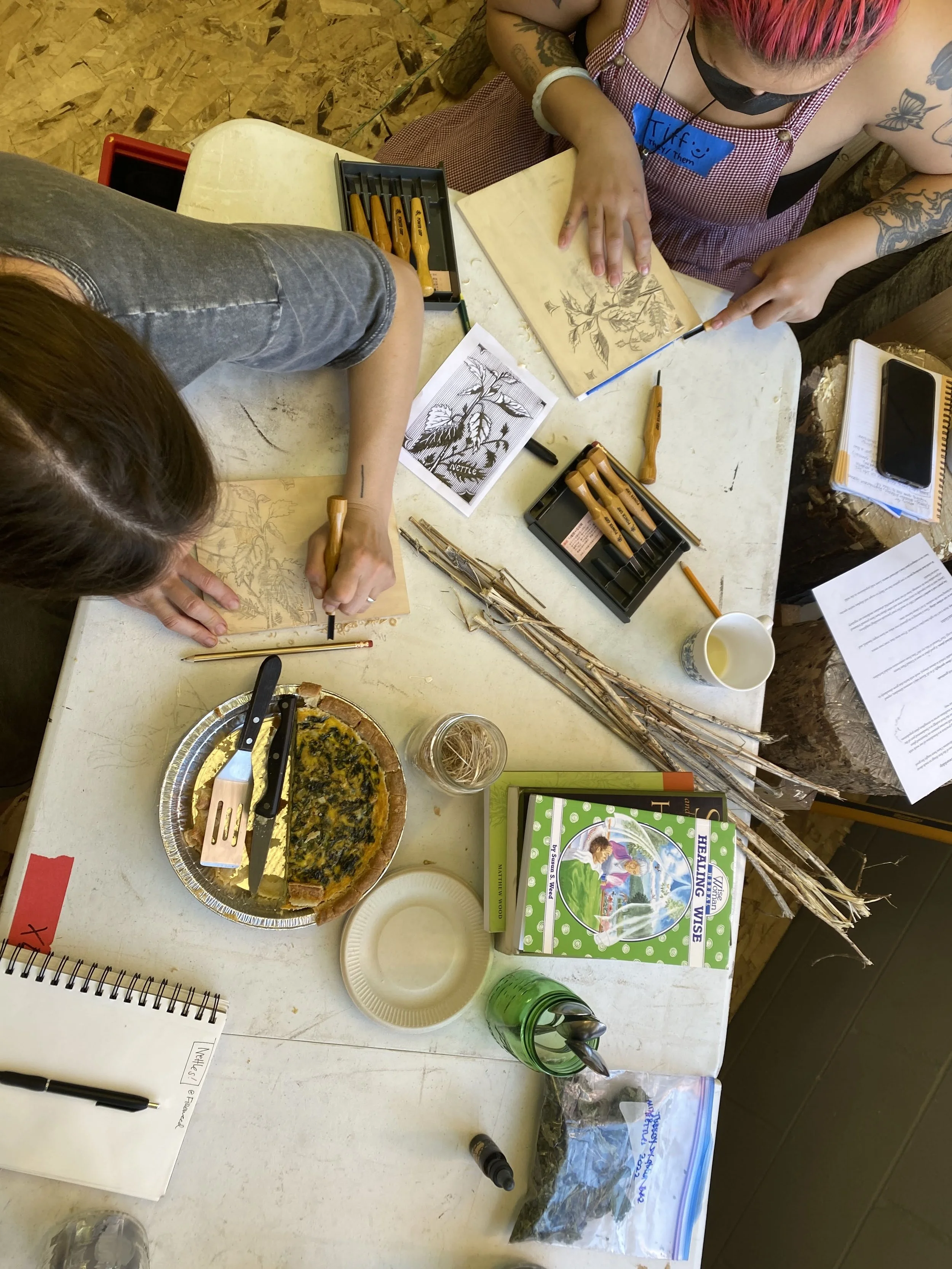
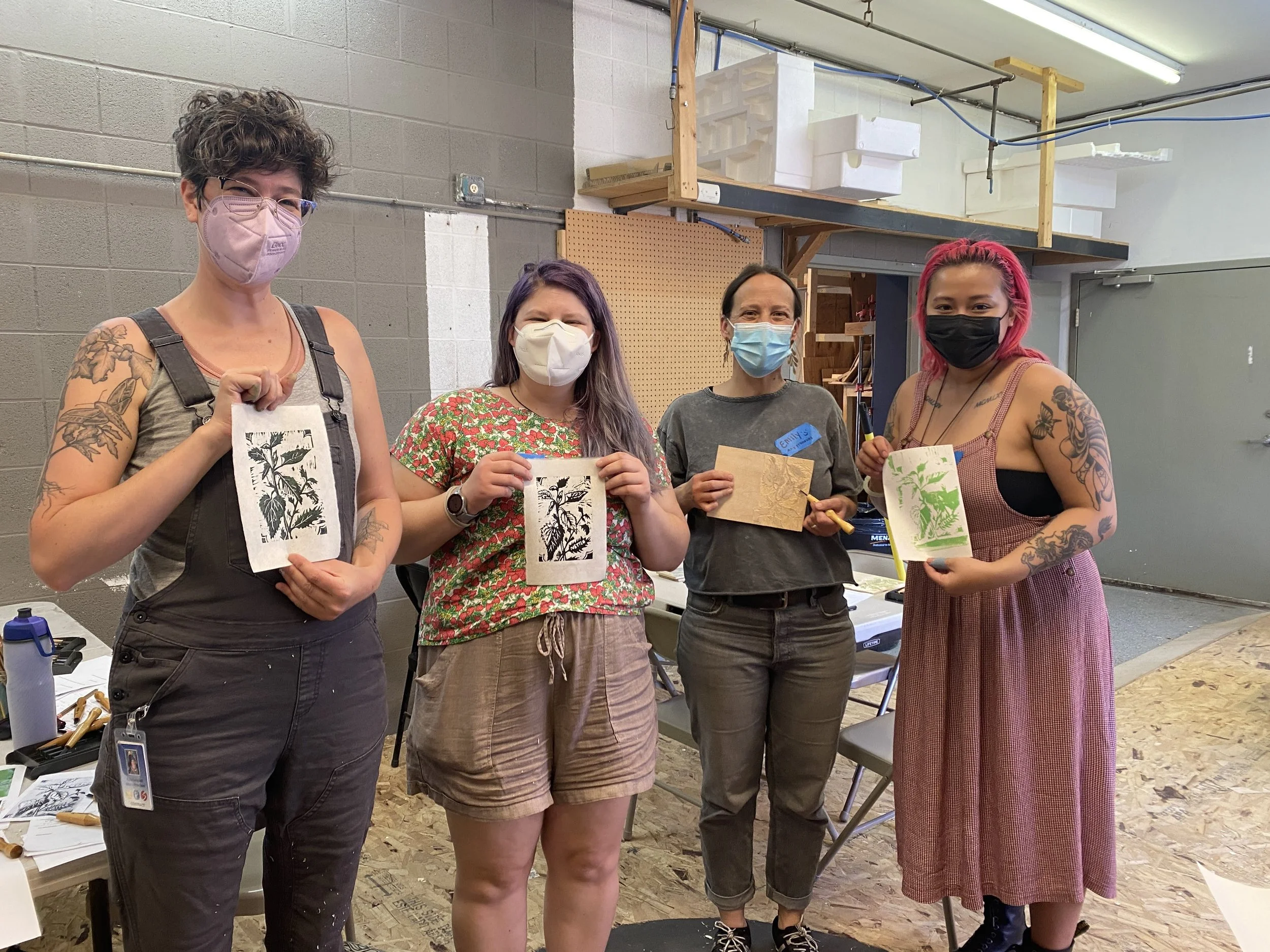
Students carve their blocks after enjoying nettle quiche. Nettles have excellent nutritional benefits including vitamins, amino acids, and minerals
Nettles
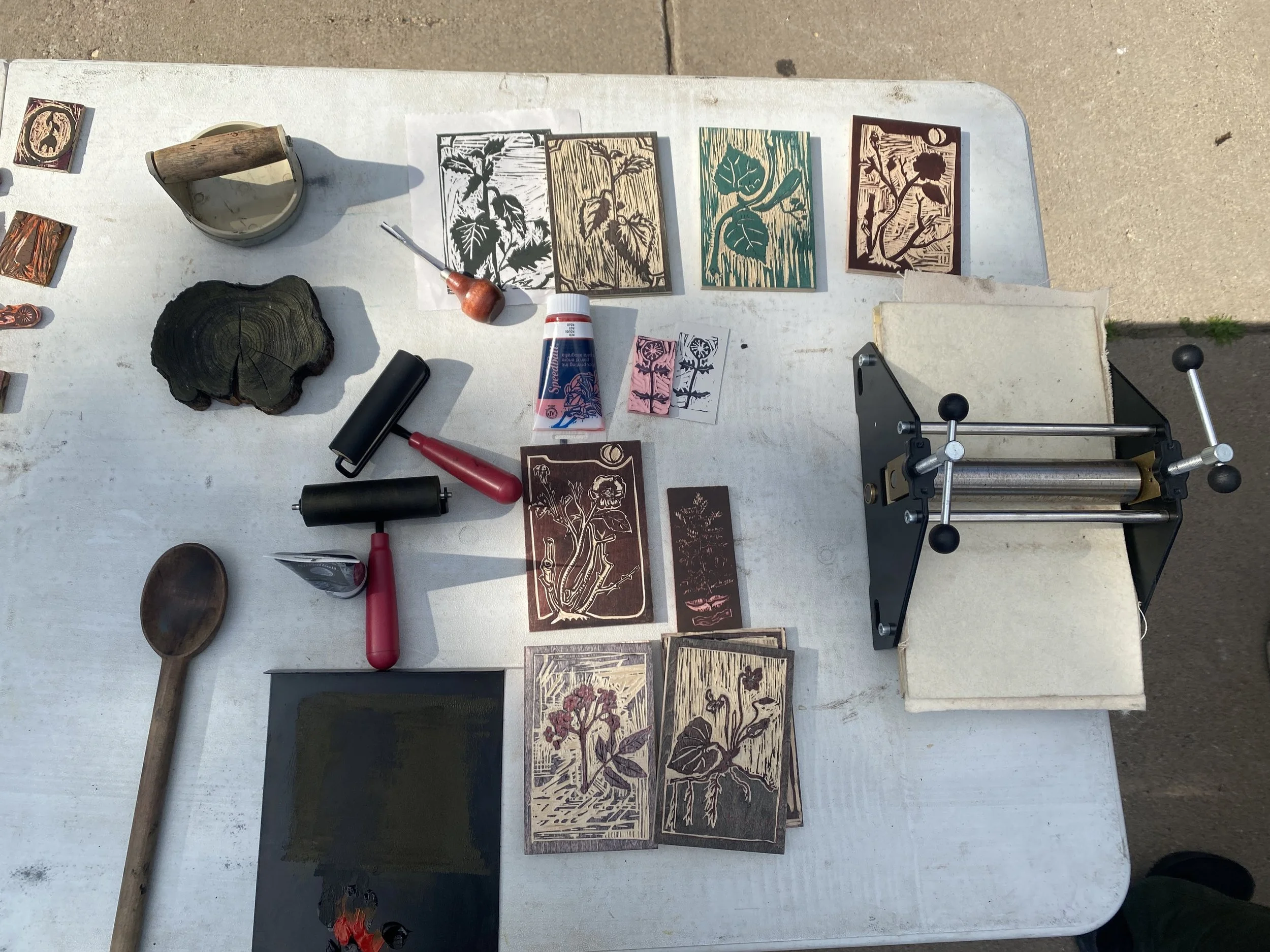
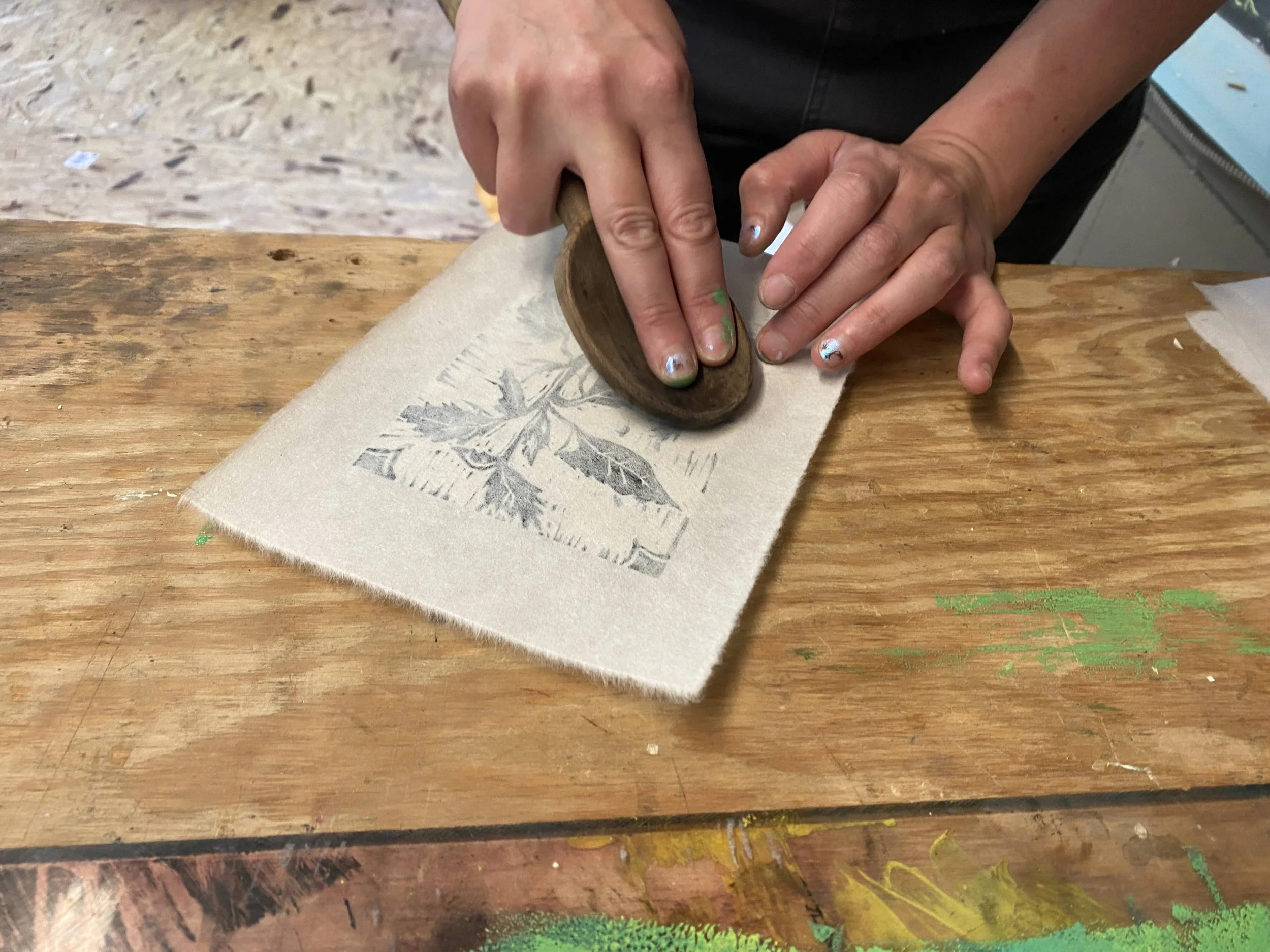
Herbalist Emily Pearson Ryan introduces the history of nettle use, harvest practices, and medicinal and culinary benefits. Jessie teaches how to carve and print a woodblock image of the plant. The class enjoys tea and nettle quiche!
Oak and Yarrow
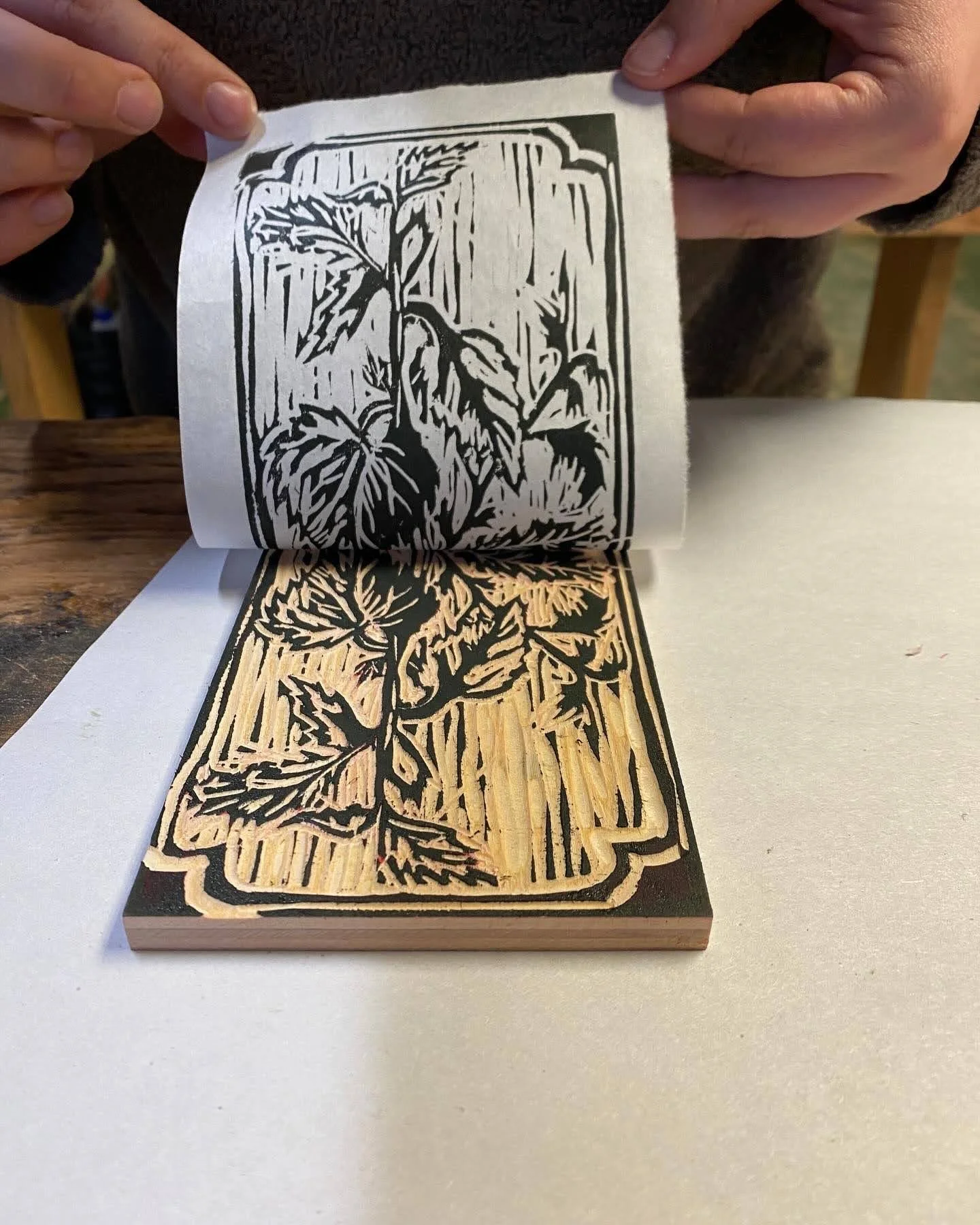
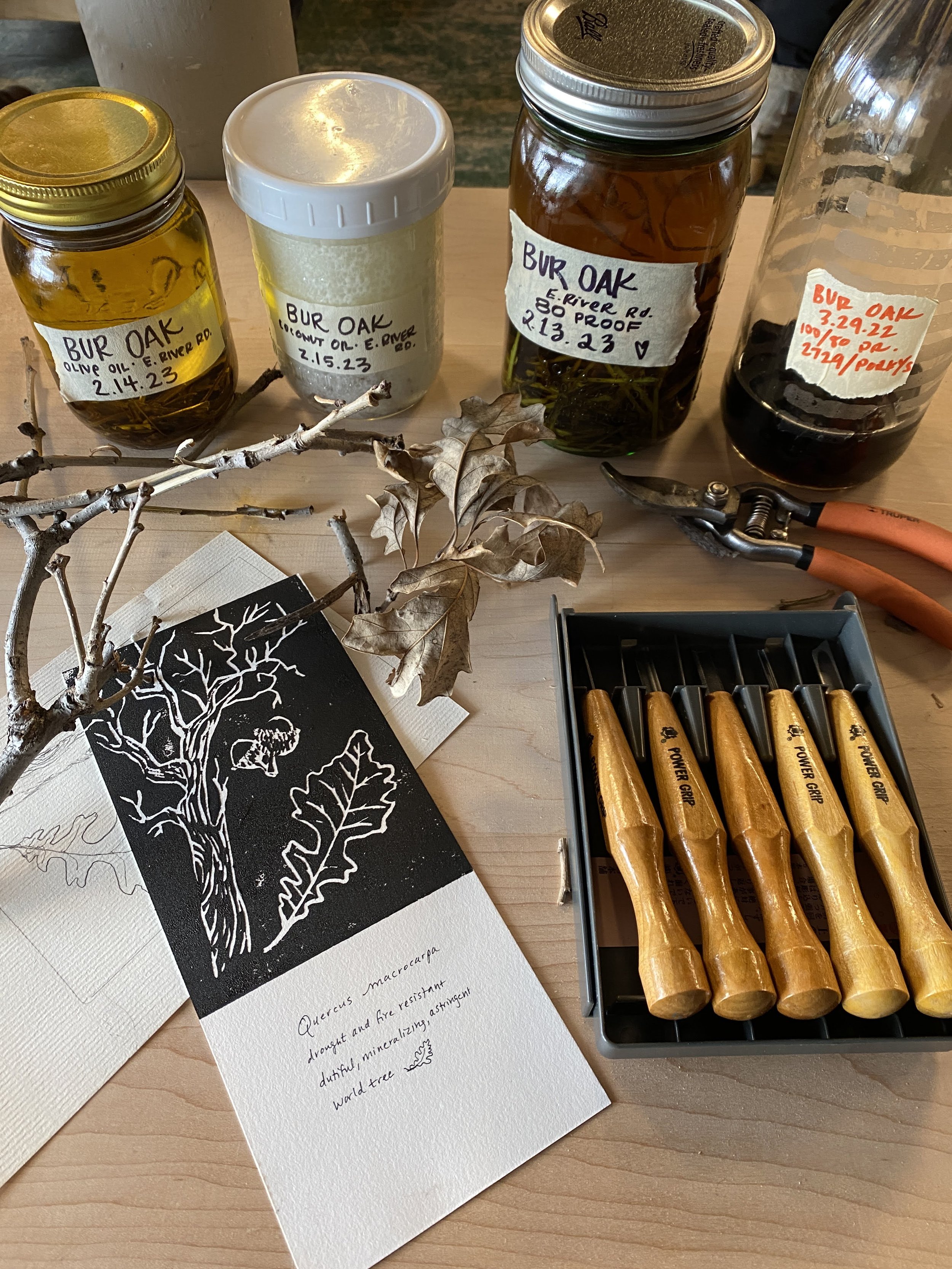
In the first Ways of Plants class, February 2022, Emily introduced the unique history of oak and its bark’s astringent properties. She also covered the sacred oaks’ role in the Stop the Reroute fight to preserved sacred Dakota Land when Highway 55 was rerouted in 1999.
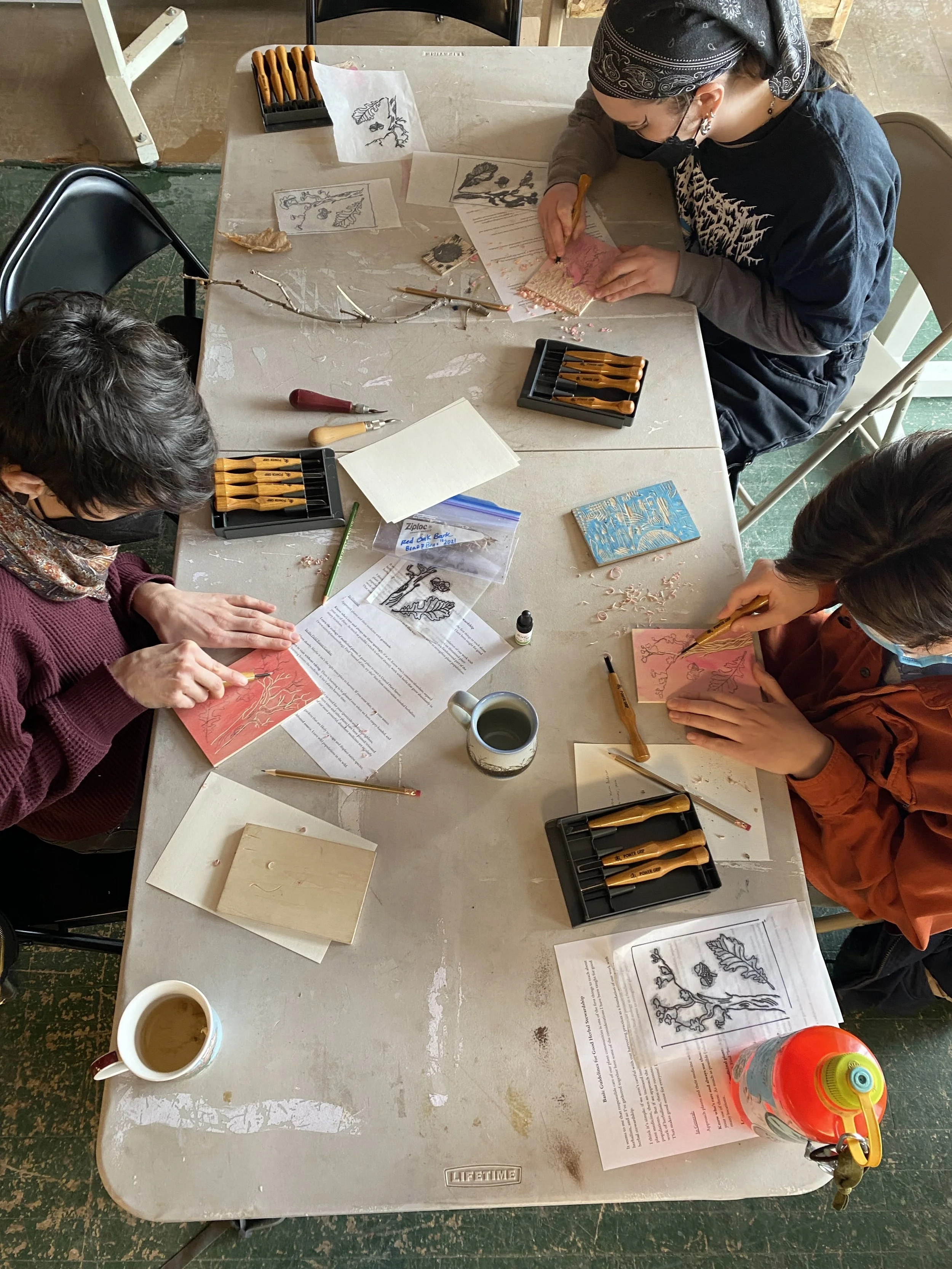
Participants carved and printed oak trees or oak leaves on cards with inscriptions underneath.
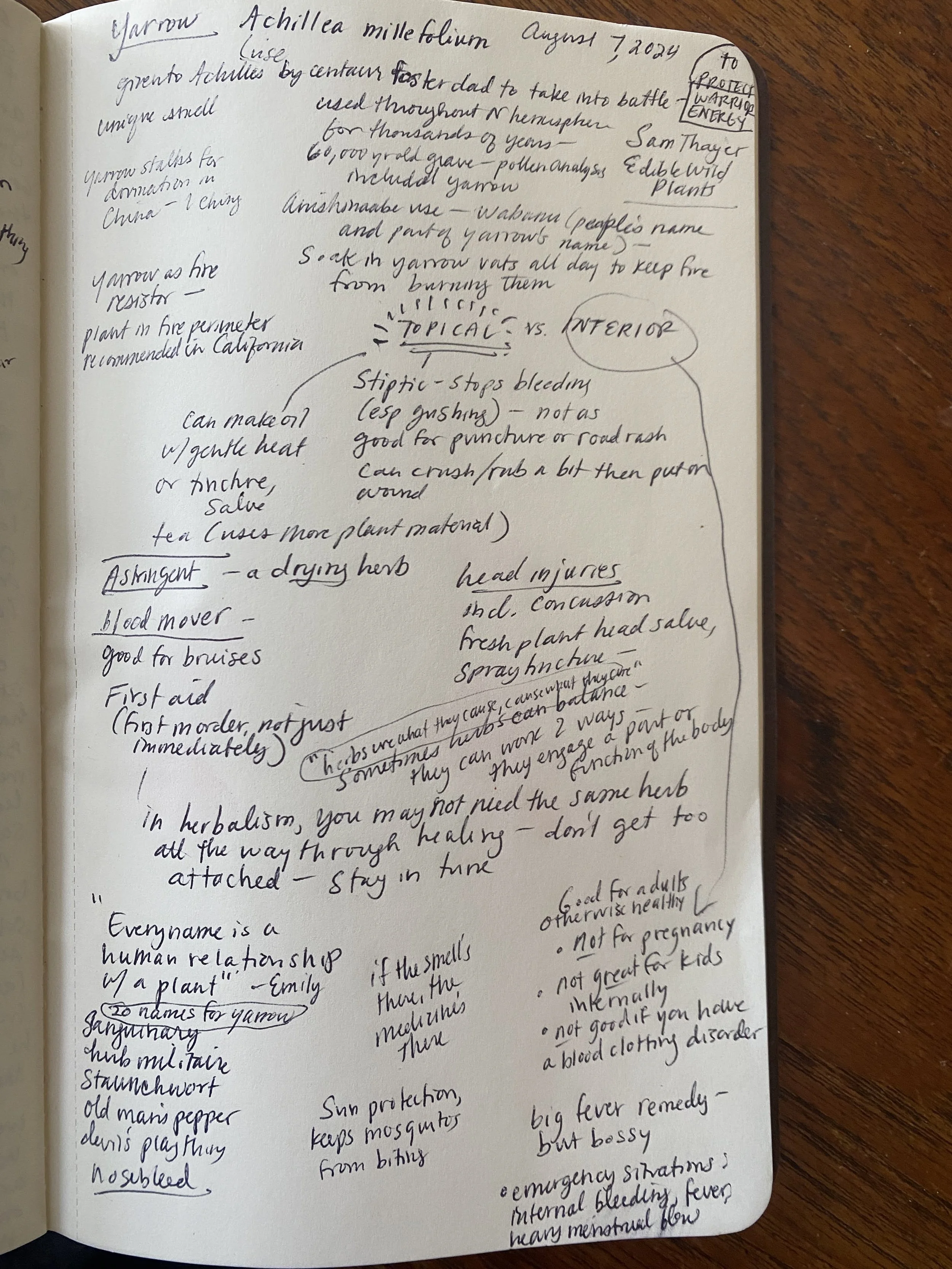
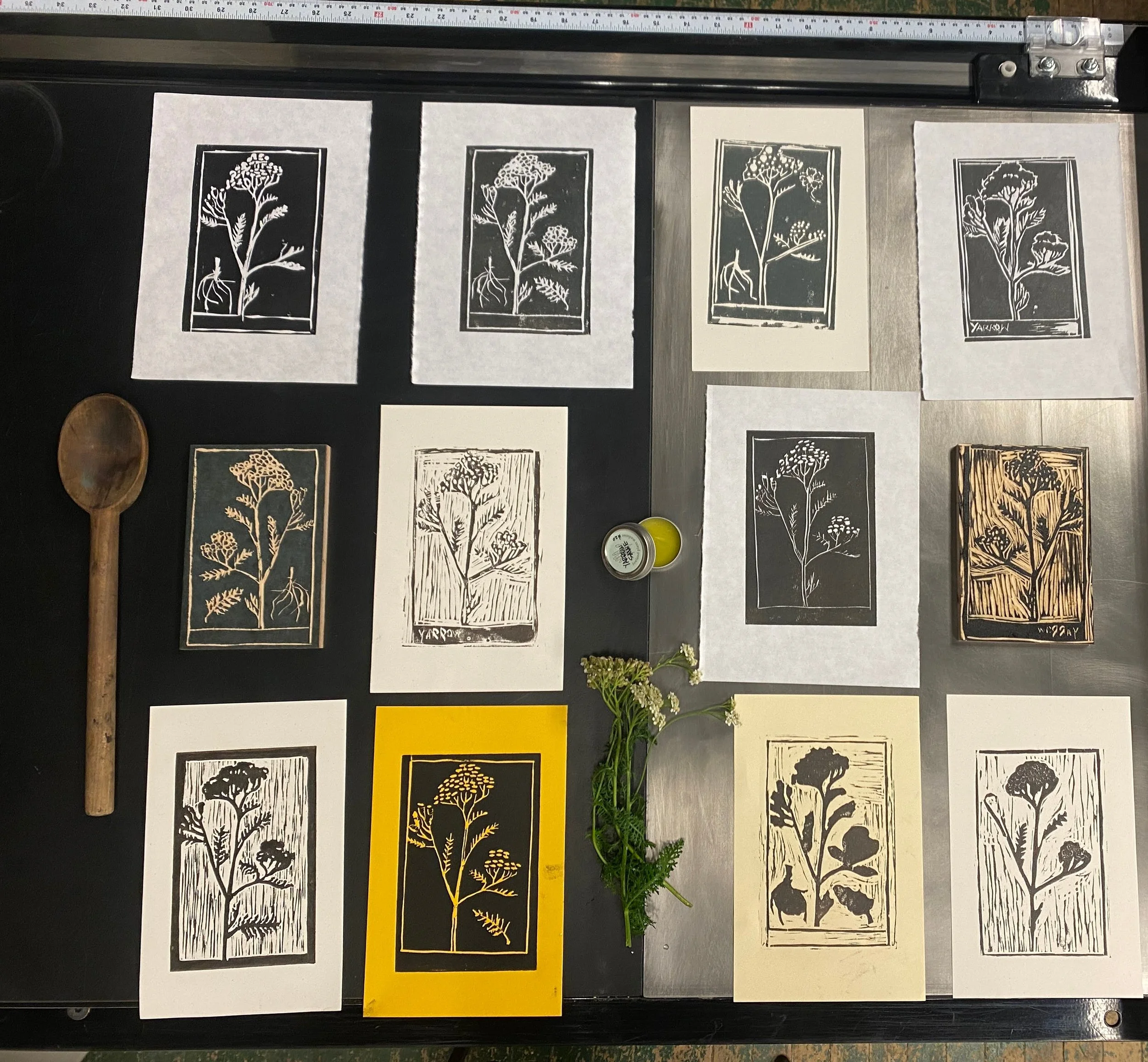
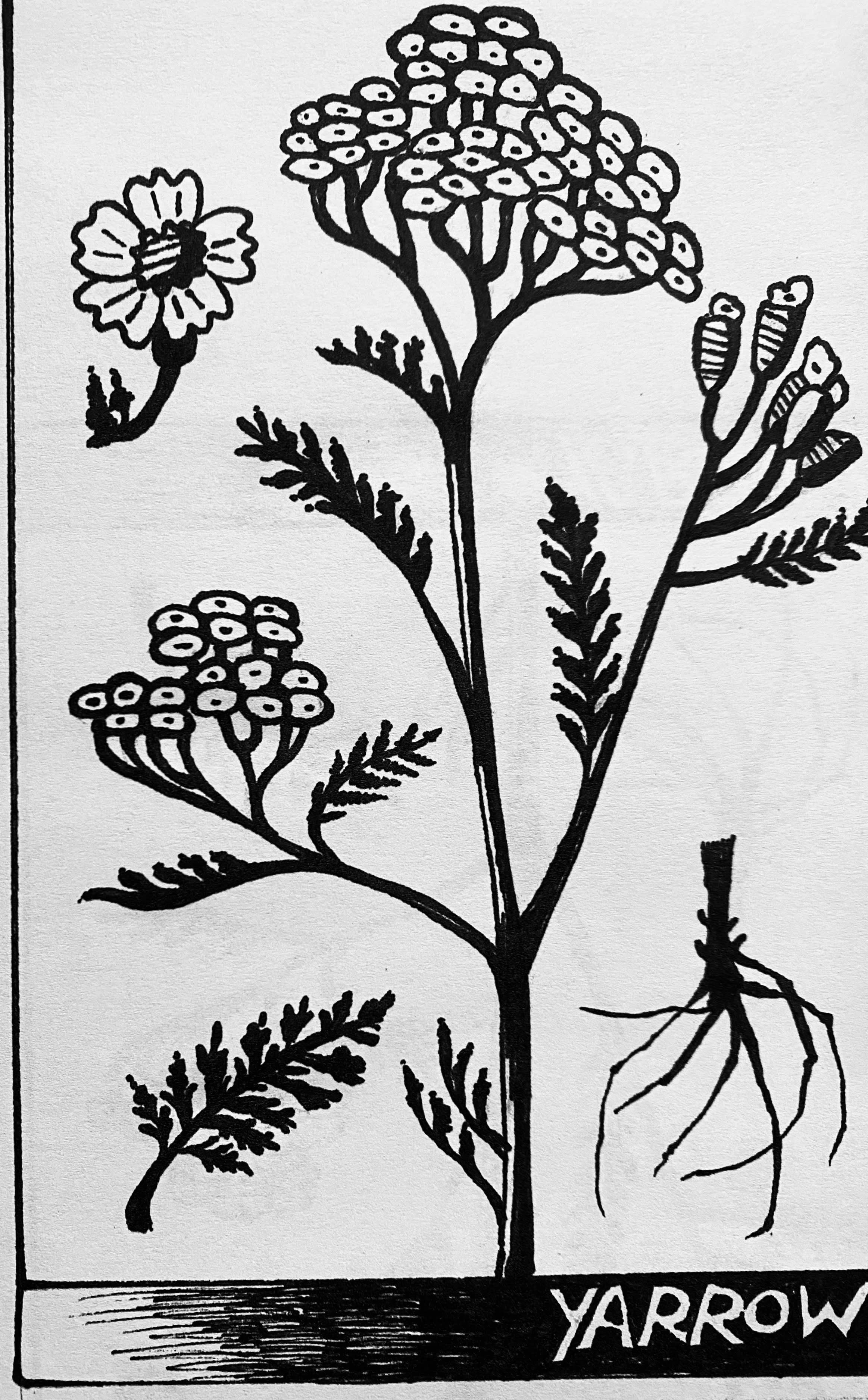
For the Yarrow class the following year, students learned about this plant’s powerful coagulating abilities—Emily keeps a yarrow tincture spray in the kitchen for finger cuts but warns against internal use (as with many herbs, yarrow has the power to both clot and release clots—its ultimate power is in restoring balance).

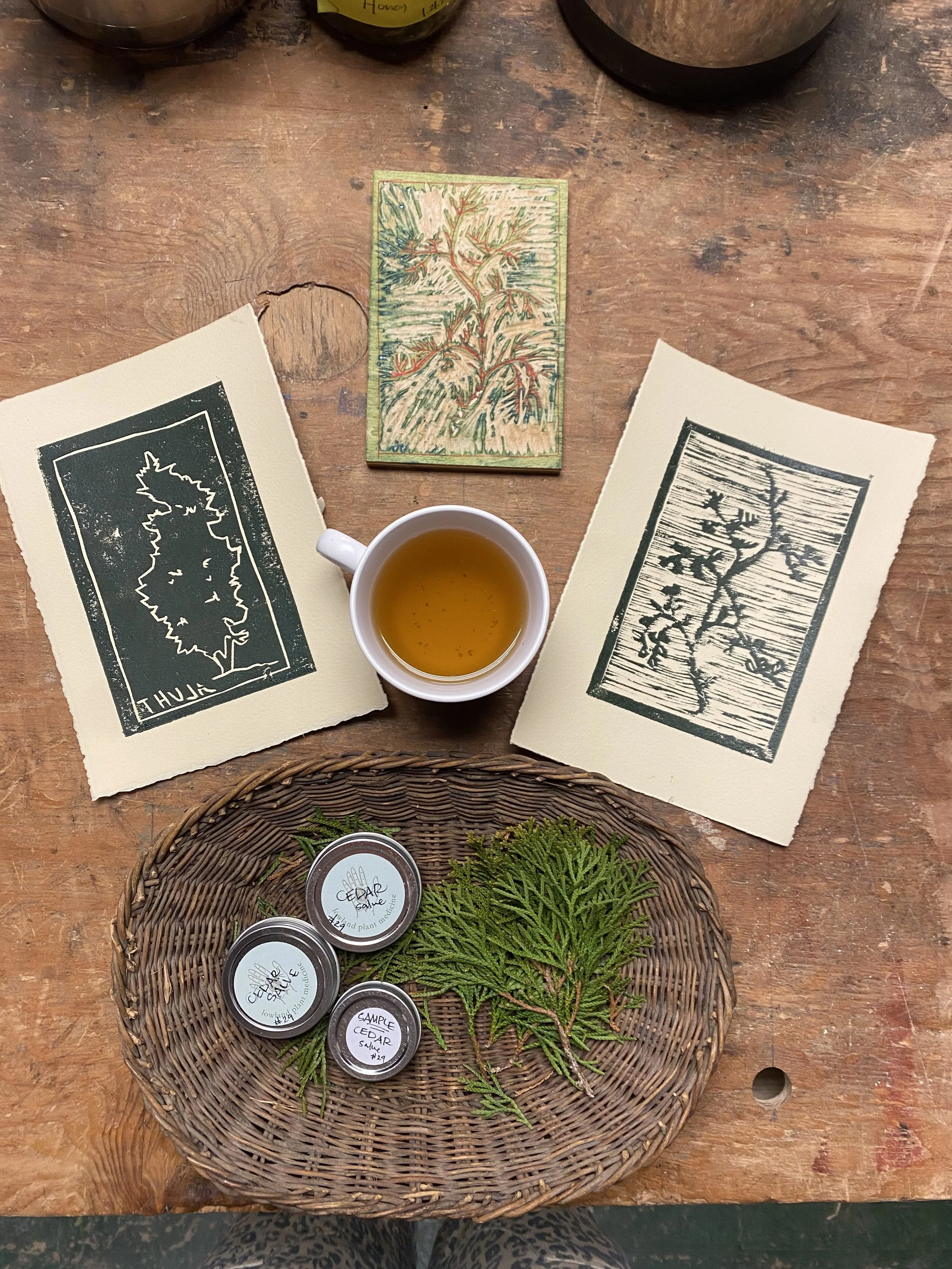
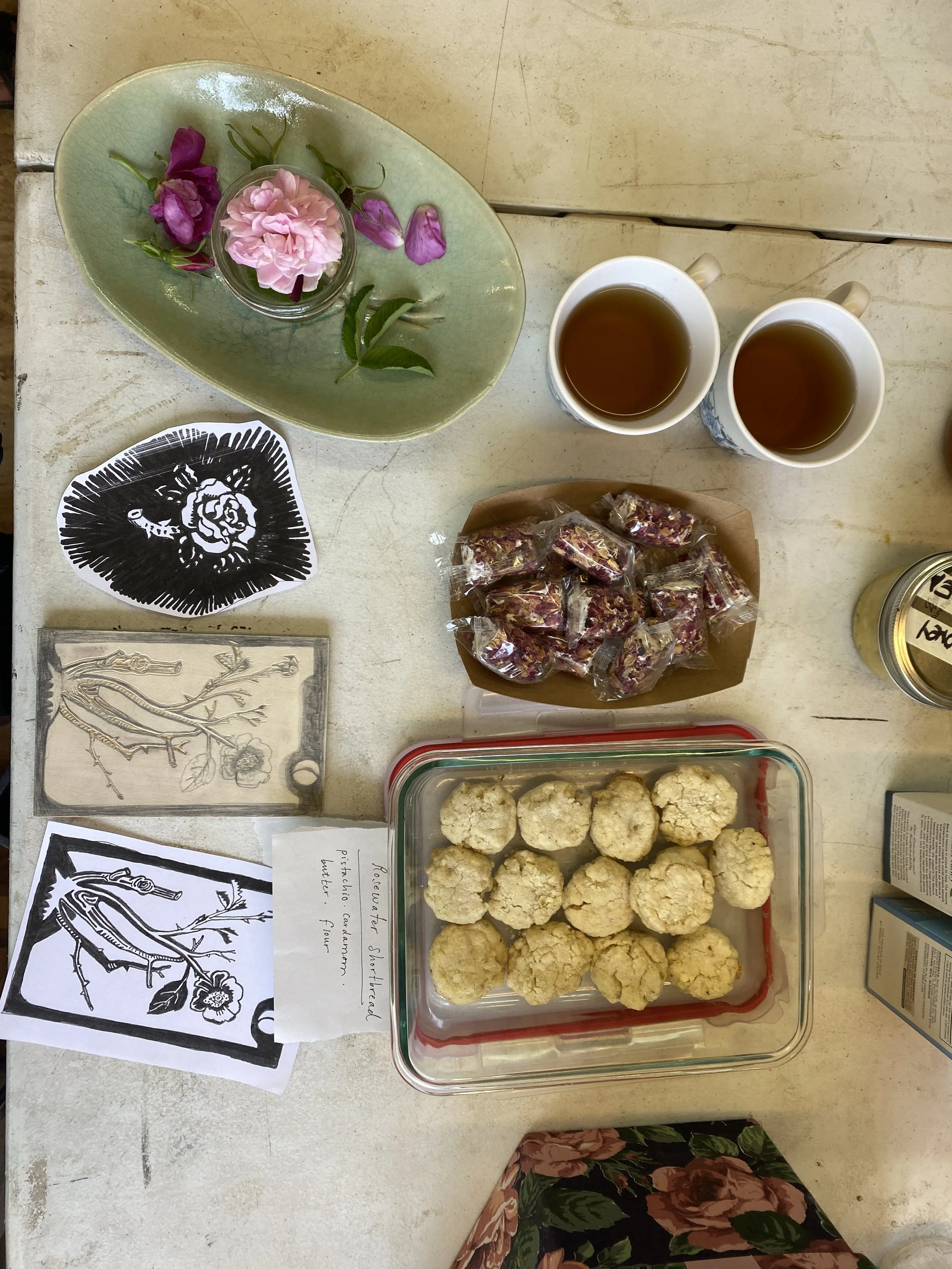
Rose, Elderberry, Basswood, Cedar, Violet
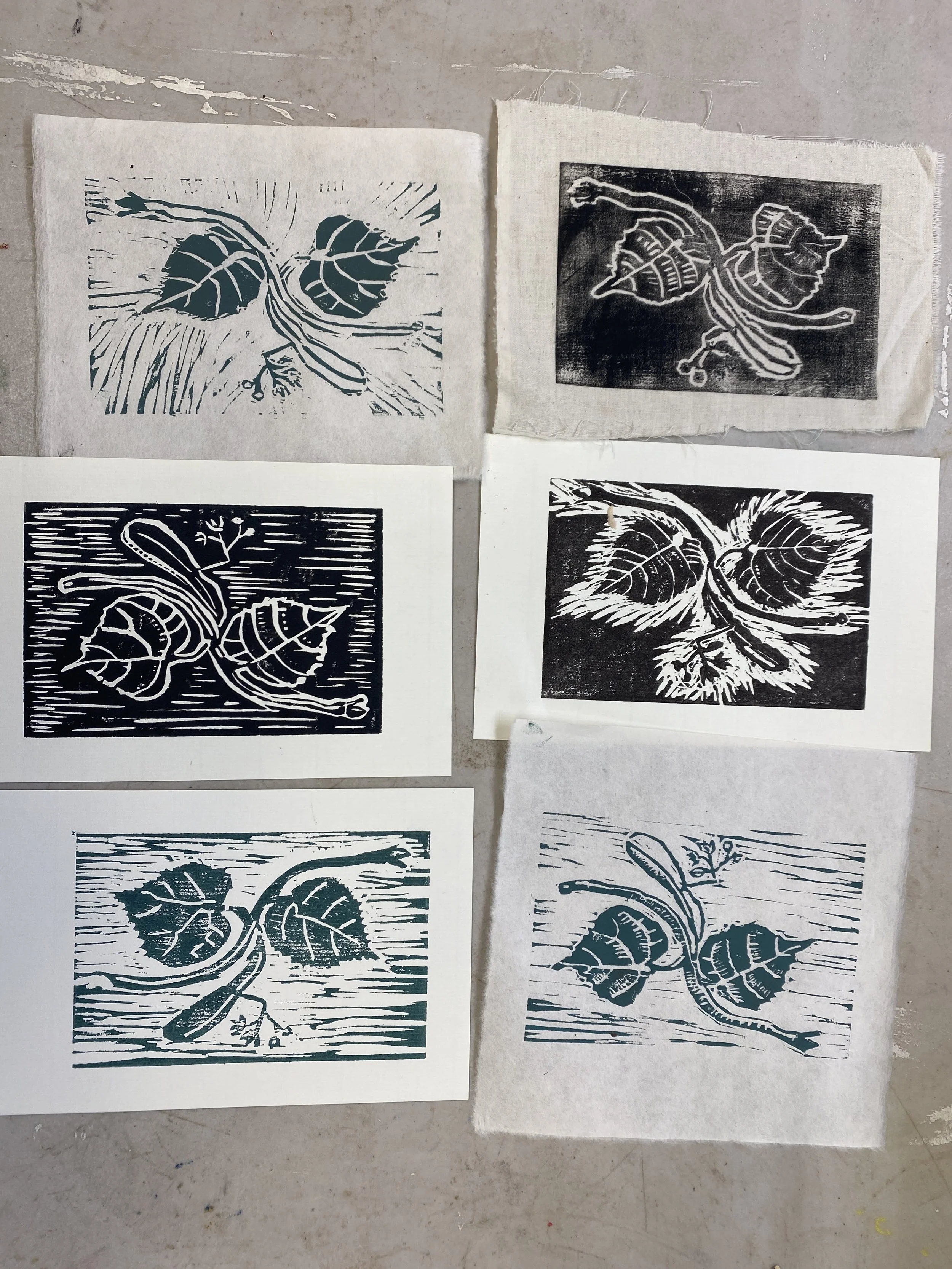
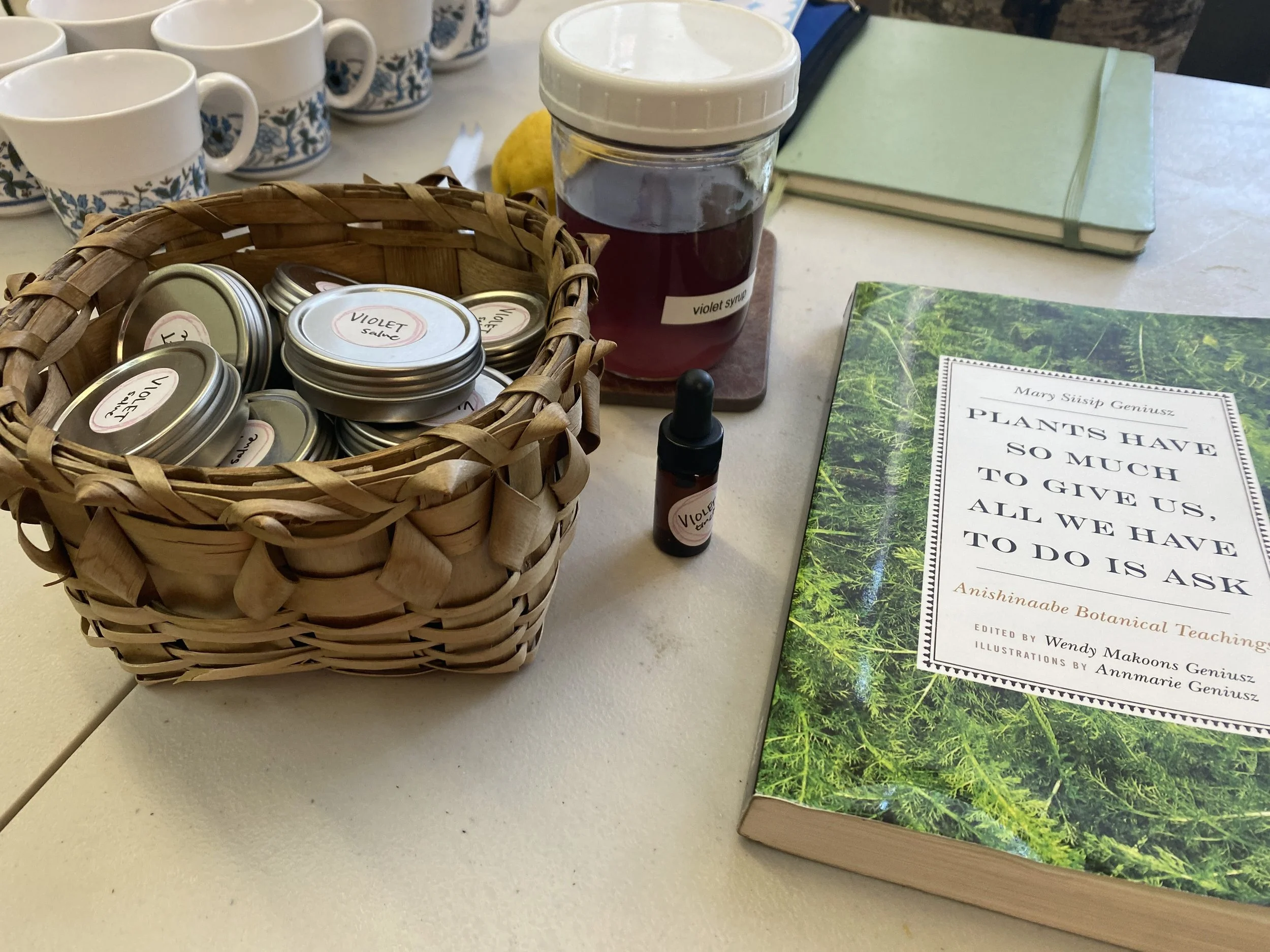
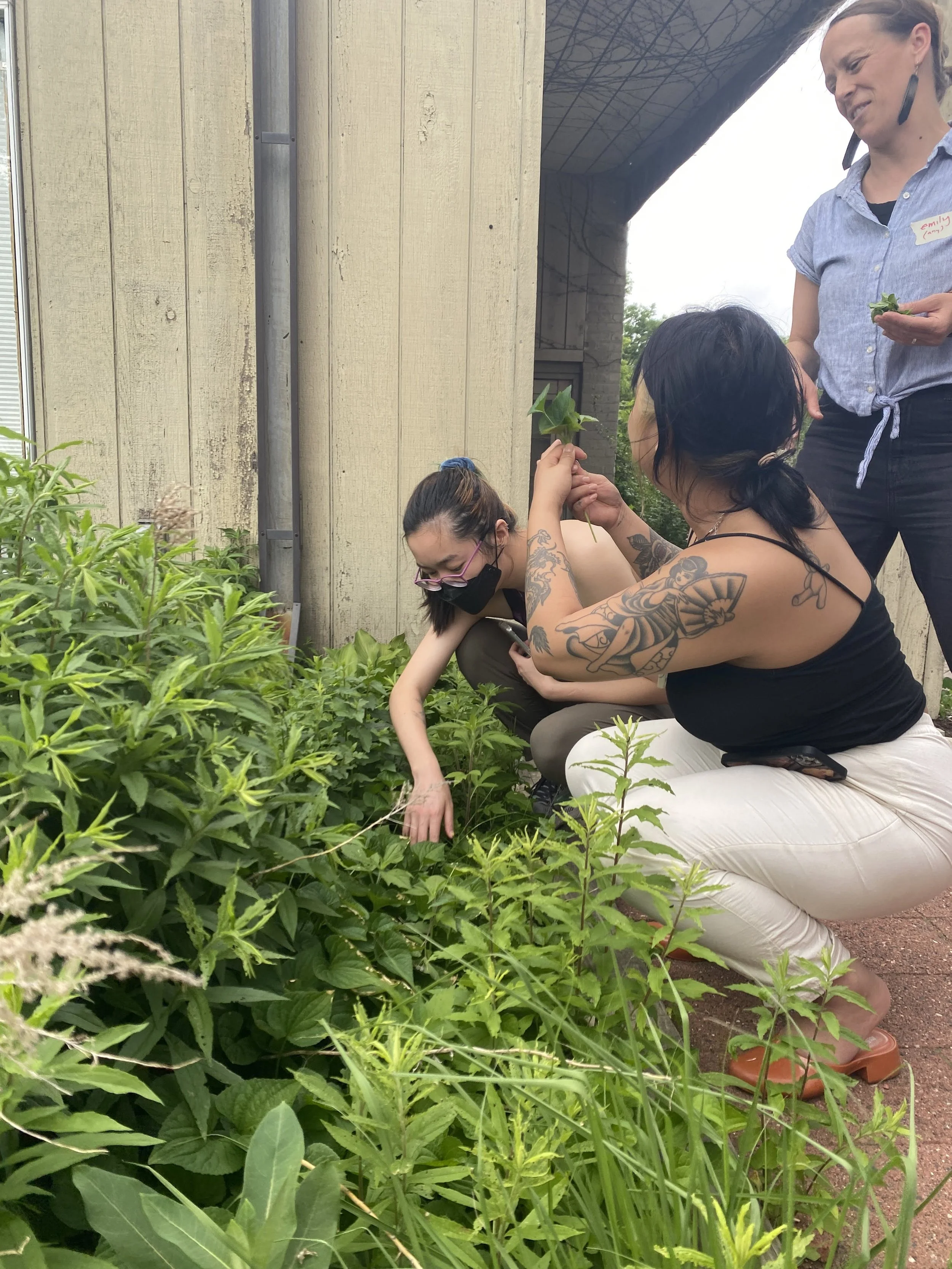
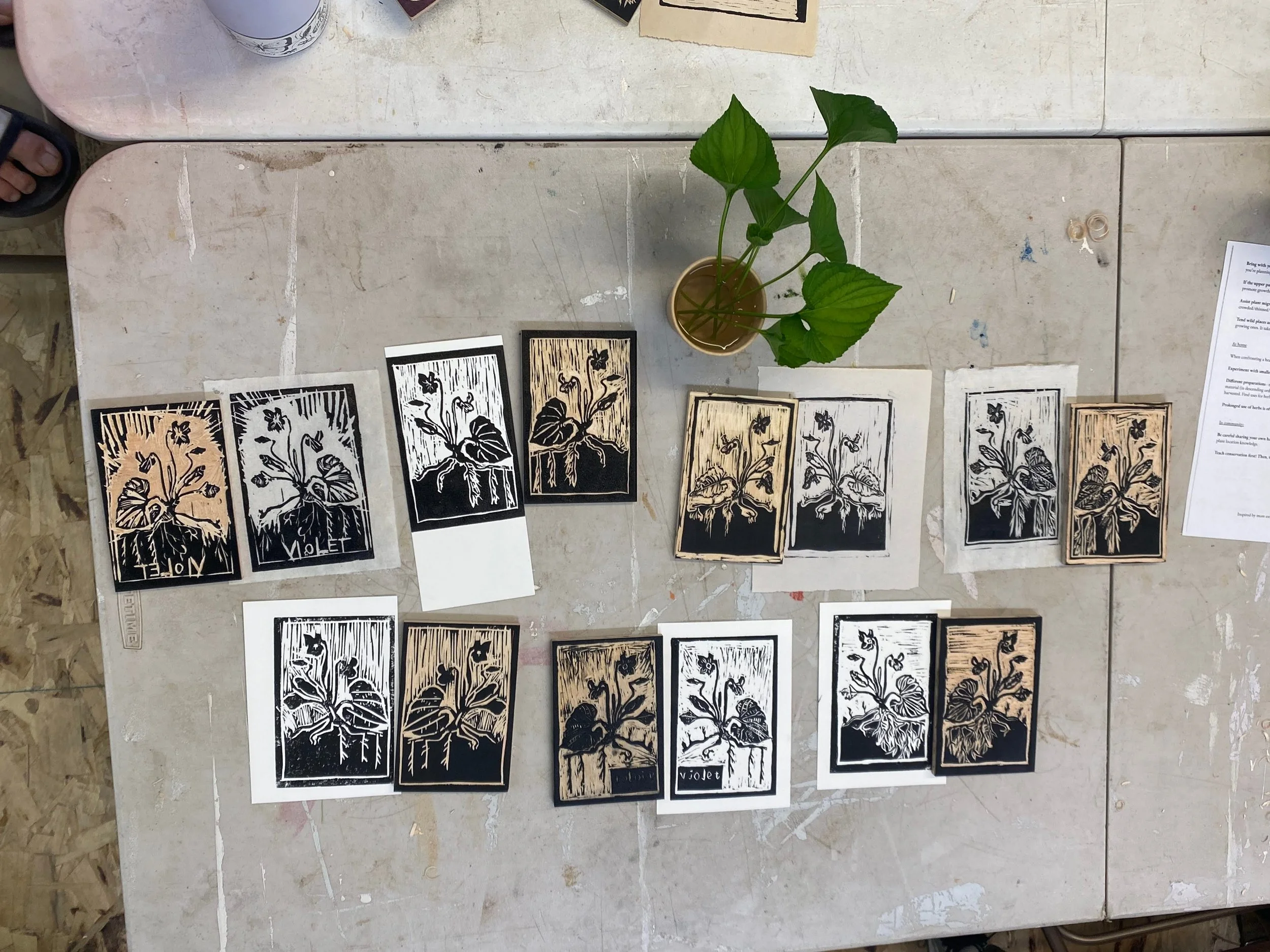
In other Ways of Plants classes, students learned about the history, uses, and imagery of many other local plants. We were able to harvest violets for inspiration from the small prairie patch behind Fireweed Woodshop, and the chatty class proved the lore that violets draw out shy people into conversation. In the basswood class, we learned that ancient thinkers believed heated arguments were best discussed under the shade of the linden (basswood), while we enjoyed basswood flower tea and got to handle basswood cordage.